
Shop electrical parts for classic Triumph, BSA and Norton motorcycles. The range covers everything from batteries and charging systems to ignition, wiring harnesses, switches and lighting. We stock genuine Lucas parts, Lucas-pattern replacements, and modern upgrades from Podtronics, Boyer Bransden, Tri-Spark, Sparx and Wassell.
Most vintage British motorcycle electrical systems work differently from modern bikes. Before you order, find out four things: your bike’s earth polarity (positive or negative), voltage (6V or 12V), charging type (dynamo, single-phase alternator or three-phase alternator), and ignition type (magneto, points, energy transfer or electronic). The guide below explains each one.


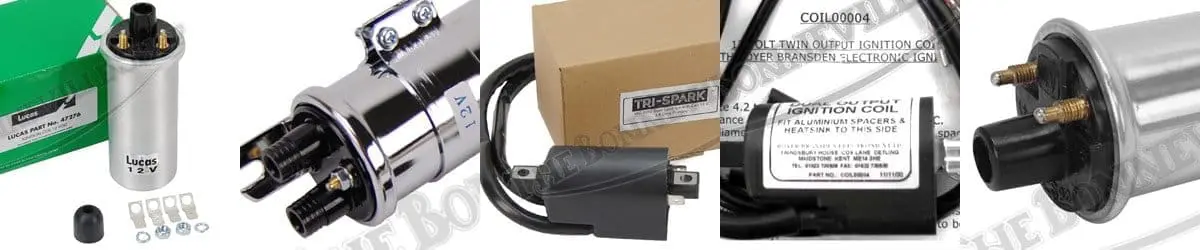

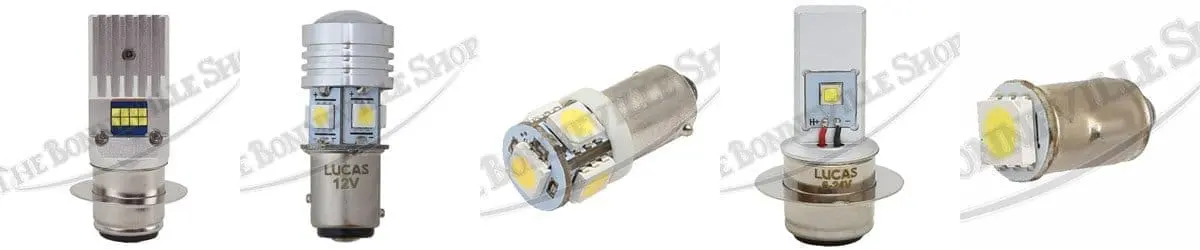


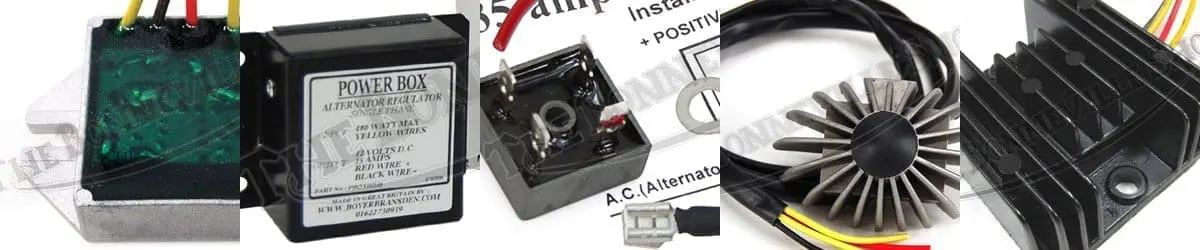

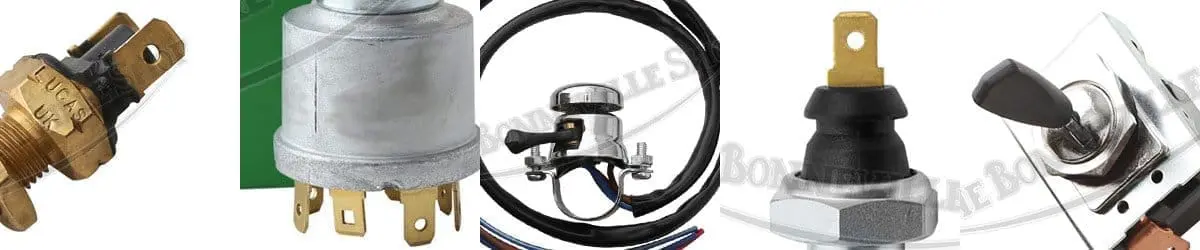

Table of Contents
Summary of Key Electrical components
Power and charging
- Batteries: Lucas-style and modern replacement batteries in 6V and 12V. Match the voltage, terminal layout and size of the original.
- Charging System: Lucas-type alternator stators and rotors, in standard and high-output versions, for single-phase and three-phase systems.
- Regulators & Rectifiers: Zener diodes, rectifiers, and combined solid-state regulator/rectifiers such as Podtronics.
Ignition
- Electronic Ignitions: Boyer, Pazon, Tri-Spark, Sparx and Wassell Vape conversions, plus magneto replacement kits.
- Points Ignitions: Contact breaker points, condensers, points plates and auto-advance parts for original-specification ignition.
- Ignition Coils: 6V and 12V single and dual-output coils. Match the coil’s resistance to your ignition system.
- Spark Plugs & Leads: Champion and NGK plugs, high-tension (HT) leads, plug caps and clips.
Wiring and controls
- Wiring Harnesses: Lucas-color-coded main harnesses and sub-harnesses, sold by model and year.
- Electrical Connectors: Lucas-type bullet connectors, sleeves, spade terminals, ring terminals and junction blocks.
- Switches: Ignition, lighting, handlebar, stop-lamp and kill switches.
Lighting
- Lighting Options: Headlamps, tail lamps, indicators and related lamp parts.
- Incandescent Bulbs: Original-type 6V and 12V bulbs, including BPF, BA15s/BA15d and BA9s bases.
- Halogen Bulbs: Brighter headlamp bulbs. Check that your alternator can supply the extra load.
- LED Bulbs: Low-draw lighting. Some LEDs are polarity-specific, so check before you buy.
Brands
- Lucas Electrical: Genuine Lucas and Lucas-pattern parts.
What Makes Vintage British Motorcycle Electrics Different
Positive earth (positive ground)
On most British motorcycles, the frame is connected to the positive battery terminal, not the negative one as on modern bikes. Lucas adopted positive earth around 1936. One reason given at the time was that it makes the spark plug’s center electrode negative, which improves plug performance and life (Lucas Technical Service (PDF)). Workshop manuals show Triumph changing to negative earth with the 1979 models (Motorcycle Classics). Earth polarity affects:
- battery connection
- ammeter direction
- Zener diodes (positive earth only, as originally designed)
- electronic ignition wiring
- LEDs and other polarity-sensitive accessories
- dynamo regulators, which come in positive-earth and negative-earth versions (teb-tec V-Reg data (PDF))
Experienced builders often recommend keeping positive earth and the standard Lucas color codes unless there’s a good reason to change (BritSpark wiring guide).
Several eras of charging systems
- Dynamos (mostly pre-1960s): for example, the Lucas E3 dynamo with an MCR2 mechanical control box. These are usually 6V. Solid-state replacement regulators are available (teb-tec V-Reg; Trojan Classics).
- Early single-phase alternators: these include 6V three-wire stators such as the RM19, which switch extra coils in when the lights are on (Britbike forum).
- 12V single-phase alternators: for example, the two-wire RM21, rated about 120 W (10 A) (Rex’s Speed Shop – Lucas alternator data (PDF)). These are regulated by a separate Zener diode on a heat sink, and use a separate bridge rectifier.
- Three-phase alternators (Lucas, from 1978): these have nine stator coils and three output wires (Britbike forum).
- Energy transfer (ET): a battery-less system for competition models. Lucas 1967 was the last year Triumph and BSA offered ET (Access Norton – 2MC article).
Zener diode regulation
The Zener diode starts clipping at about 14.3 V by dumping excess current to ground. It needs its heat-sink plate in the airflow, and it’s rated about 100 W, which leaves little headroom for an uprated stator (BritSpark charging guide). Modern combined regulator/rectifiers, such as Podtronics or Tri-Spark MOSFET units, replace the rectifier, Zener and capacitor in one box (Andover Norton recommended upgrades). When fitting one, disconnect the original Zener, because the new unit already regulates (Access Norton forum).
Lucas wiring colors don’t follow modern logic
Lucas used its own wire color code. Brown is typically the battery feed, and the earth color changed over the years: black on earlier diagrams, red by the 1960s on many British bikes (Britbike forum; Moss Motoring). Don’t assume red is positive and black is negative. Use a wiring diagram for your exact year, and a reference such as the Greg Marsh wiring helper, Classic British Spares’ color key or the AO Services alternator color guide (PDF).
The frame is part of the circuit
Every component returns current through the frame. Paint, powder coat, rust and rubber mounts all interrupt that return path. Rubber-mounted engines, such as the Norton Commando’s Isolastic setup, need a dedicated earth strap.
6V vs 12V
Many earlier bikes, particularly dynamo machines, are 6V. Bulbs, coils, batteries, horns, flasher relays and some ignitions are all voltage-specific. A 12V conversion usually means changing the regulator, battery, bulbs and coils as one planned job, not piece by piece.
Batteries, capacitors and lithium
- Lucas 2MC capacitor: this lets battery-and-coil bikes run without a battery. Original units have a limited service life, so fit a freshly made replacement, observe its polarity, and remember that it does nothing while a charged battery is connected (Access Norton; Norton Owners Club forum).
- Lithium batteries: these are light and compact, but they need tightly controlled charging. Generally, keep charging below about 14.6–15 V and use a lithium-specific charger (Bennetts BikeSocial; Classic Bike Hub). The original Zener-and-rectifier system isn’t designed for lithium, so measure the charging voltage across the rev range, and fit a modern regulator first if needed.
LEDs and polarity
Some LED bulbs work on either polarity, and others don’t. For example, the BA7S warning-lamp LEDs we sell are negative-ground and need rewiring to work on positive ground (our LED troubleshooting guide). LED indicators draw so little current that original thermal flasher relays may not flash correctly, so you may need an LED-compatible relay (Green Classic & Vintage Spares).
Electrical load budget
A standard RM21 alternator delivers its rated output only at higher rpm, about 5,000 rpm (Rex’s Speed Shop (PDF)). Halogen headlamps, heated grips and extra lights can drain the battery in town riding. Add up your loads before upgrading, and consider a high-output stator, LED lighting, or both.
How to Navigate the Electrical Maze: A Checklist
- Identify the bike. Note the model, year, and engine and frame numbers. Get the correct Triumph, BSA or Norton workshop manual and its wiring diagram.
- Check earth polarity. See which battery terminal is connected to the frame.
- Check system voltage. Read the battery label and bulb markings, and identify the regulator type.
- Identify the charging system. Is it a dynamo, a two-wire or three-wire single-phase stator, or a three-phase stator? Count the stator wires.
- Identify the ignition. Is it a magneto, points with coils, energy transfer, or an existing electronic kit? Is there a ballast resistor?
- Inspect the harness. Look for previous owners’ modifications, non-Lucas colors, wire nuts, and household connectors.
- Test before you buy. A multimeter will answer most questions:
- battery resting voltage of about 12.6 V for 12V lead-acid
- charging voltage at 3,000 rpm
- stator AC output and resistance
- voltage drop across switches and earths
- Plan upgrades as a package. For example, a regulator/rectifier plus battery plus electronic ignition plus LEDs, all chosen for the same polarity and voltage.
Installation and Usage Tips by System
Batteries
- Connect the earth terminal last when installing, and disconnect it first when removing. On positive-earth bikes, the earth terminal is the positive one.
- Use a smart charger suited to the battery’s chemistry. Never use a lead-acid desulfation mode on lithium.
- Secure the battery and its vent tube. Vibration and acid spills kill batteries and frames.
- Browse batteries.
Charging system
- Check the rotor-to-stator air gap and rotor security when fitting a new stator. A loose rotor can wipe the stator.
- Route stator wires away from the primary chain, and protect them where they pass through the case grommet.
- Test AC output with the stator leads disconnected, following your manual’s figures.
- Browse charging system.
Regulators and rectifiers
- Zener: mount it on a clean, bare heat sink with a good earth contact, and keep the heat sink in the airflow.
- Combined units (Podtronics and similar): wire the AC inputs to the stator, and DC positive and negative to the harness. Disconnect the old Zener (Access Norton).
- Match the unit to your stator type (single-phase or three-phase) and its wattage rating.
- Browse regulators and rectifiers.
Points ignition
- Set the points gap and static timing as the manual specifies, then check with a strobe.
- Replace condensers in pairs on twins, and check that the auto-advance unit moves freely.
- Browse points ignitions.
Electronic ignition
- These systems need a healthy battery and good voltage. Remove the condensers, the ballast resistor where specified, and the mechanical advance unit.
- See our electronic ignitions guide and diagnostics article.
Ignition coils
- Match the voltage and primary resistance to your ignition. For example, twin 6V coils are often used in series with electronic kits.
- Keep the HT towers clean and dry.
- Browse ignition coils.
Spark plugs and leads
- Use the heat range and reach your manual lists, and gap the plugs correctly.
- Fit 5k-ohm suppressed caps where your electronic ignition requires them.
- Browse spark plugs and leads and Champion.
Wiring harnesses and connectors
- Lay the new harness next to the old one and transfer connections one at a time.
- Use proper Lucas-type bullets and the correct crimp tool rather than solder alone. Solder can crack under vibration.
- Add a main fuse near the battery if your bike doesn’t already have one.
- Browse wiring harnesses, electrical connectors, British wiring and electrical tools.
Switches
- Clean the contacts and check voltage drop across each switch. A worn ignition or lighting switch is a common cause of mysterious faults.
- Check whether the switch is a positive-earth original or has been rewired.
- Browse switches.
Lighting
- Confirm the voltage, base type (BPF, BA15s/d, BA9s, BA7s) and polarity before ordering bulbs.
- Halogen bulbs increase current draw. LEDs reduce it but may need a different flasher relay, or a diode for warning lamps.
- Browse lighting, incandescent bulbs, halogen bulbs, LED bulbs and our LED troubleshooting guide.
Shop Electrical Parts by Motorcycle
Triumph electrical · BSA electrical · Norton electrical · Vintage Triumph parts · Norton Commando parts · BSA motorcycle parts
Electrical Brands We Stock
Lucas · Podtronics · Boyer Bransden · Tri-Spark · Sparx · Wassell · Electrex World · Champion · Tricor
Further Reading (external)
- Greg Marsh – British motorcycle wiring helper
- BritSpark – charging systems and regulator/rectifiers
- BritSpark – Lucas positive-bus wiring
- Lucas Technical Service – earth polarity (PDF)
- Rex’s Speed Shop – Lucas alternator information (PDF)
- AO Services – Lucas alternator wire colors (PDF)
- Andover Norton – basic electrical components
- Access Norton – Lucas 2MC capacitor article
- Classic Bike Hub – lithium batteries on classic bikes
Vintage British Motorcycle Electrical FAQs
Is my vintage British motorcycle positive earth?
Most Lucas-equipped Triumph, BSA and Norton motorcycles were built positive earth. Triumph changed to negative earth with the 1979 models. Check which battery terminal connects to the frame, since previous owners sometimes converted bikes.
Should I convert my bike to negative earth?
It isn’t necessary. Positive earth works perfectly well. Convert only if you have a clear reason, such as accessories that only work on negative earth. If you do, change or check the polarity of the Zener, ignition, ammeter, LEDs and any regulators.
What is a Zener diode, and do I still need one?
On 12V single-phase Lucas systems, the Zener regulates voltage by dumping the excess, starting at about 14.3 V. It needs a heat sink. A combined regulator/rectifier, such as Podtronics, replaces both the Zener and the rectifier.
Can I fit a Podtronics regulator/rectifier on a positive-earth bike?
Yes. Combined units are commonly fitted to either polarity. Wire DC positive and negative to the correct harness wires, and disconnect the original Zener.
How do I tell which alternator stator I have?
Count the output wires and check the part number. Three wires on an earlier single-phase stator usually means a 6V RM19-type unit. Two wires means a 12V single-phase unit such as the RM21. Three wires on a 1978-or-later system means three-phase.
Is my bike 6 volt or 12 volt?
Check the battery label, bulb markings and regulator type. Dynamo bikes and early alternator machines are often 6V. Most 1960s and later twins are 12V.
Can I convert from 6V to 12V?
Usually, yes. The battery, regulator, bulbs, coils, horn and flasher relay all need to change. Plan it as a complete conversion, not piece by piece.
Why don’t the wire colors match modern conventions?
Lucas used its own color code, and the earth color changed from black to red on many later diagrams. Always use the diagram for your specific model and year.
Can I use a lithium battery?
Only if your charging system holds voltage within the battery maker’s limits, generally about 14.6–15 V maximum. Measure across the rev range, and use a lithium-specific charger. Many owners fit a modern regulator first.
What does the Lucas 2MC capacitor do?
It lets a battery-and-coil bike run without a battery. It does nothing while a charged battery is connected, it must be fitted with the correct polarity, and original units have a limited life.
Will LED bulbs work on my positive-earth bike?
Many do, but some LEDs are polarity-specific. LED indicators may also need an LED-compatible flasher relay. Check the listing, and see our LED troubleshooting guide.
Can my charging system handle a halogen headlamp?
A standard 120 W RM21 can usually manage a halogen headlamp in normal use, but extra accessories may drain the battery at low rpm. Consider a high-output stator, or LEDs elsewhere, to balance the load.
Why does my bike have electrical faults that come and go?
The most common causes are poor earths, corroded bullet connectors, worn switches and loose battery terminals. Test for voltage drop under load before replacing components.
Do I need a special tool for Lucas bullet connectors?
A proper bullet-connector crimp tool and fitting tool give reliable joints that look original. Browse our electrical tools.
Should I replace the whole wiring harness?
If the harness is brittle or heavily modified, or has melted sections, yes. A new Lucas-color-coded harness makes faults much easier to trace. Order the harness for your model and year.
Where should I start with an electrical restoration?
Start with a good battery, clean earths and a measured charging voltage. Then work through ignition, switches and lighting, using the wiring diagram for your exact model.