
By Dave Porter, Technical and Customer Support at The Bonneville Shop
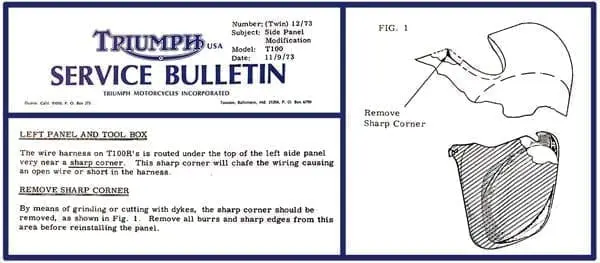
Table of Contents
Having trouble fitting Triumph parts to your vintage bike?
This interesting Triumph Service Bulletin, issued on 11/9/1973, seems to confirm what many of us have known all along- sometimes you have to massage parts to make them fit correctly, or slightly modify them to improve fitment. Pattern parts originate from all over the globe and are manufactured to varying tolerances. We find that exhaust systems, seats, fenders, sheet metal components, wiring harnesses, and many other parts require “fettling”, as the Brits would say.
“We find that exhaust systems, seats, fenders, sheet metal components, wiring harnesses, and many other parts require “fettling”, as the Brits would say.”
What is Fettling?
Fettling is the art of cutting, grinding, bending, filing, and adjusting a part or assembly to correct the fitment. This Service Bulletin proves that this fine tradition has been practiced for a long time, even with new and unused factory parts on our beloved British Iron.
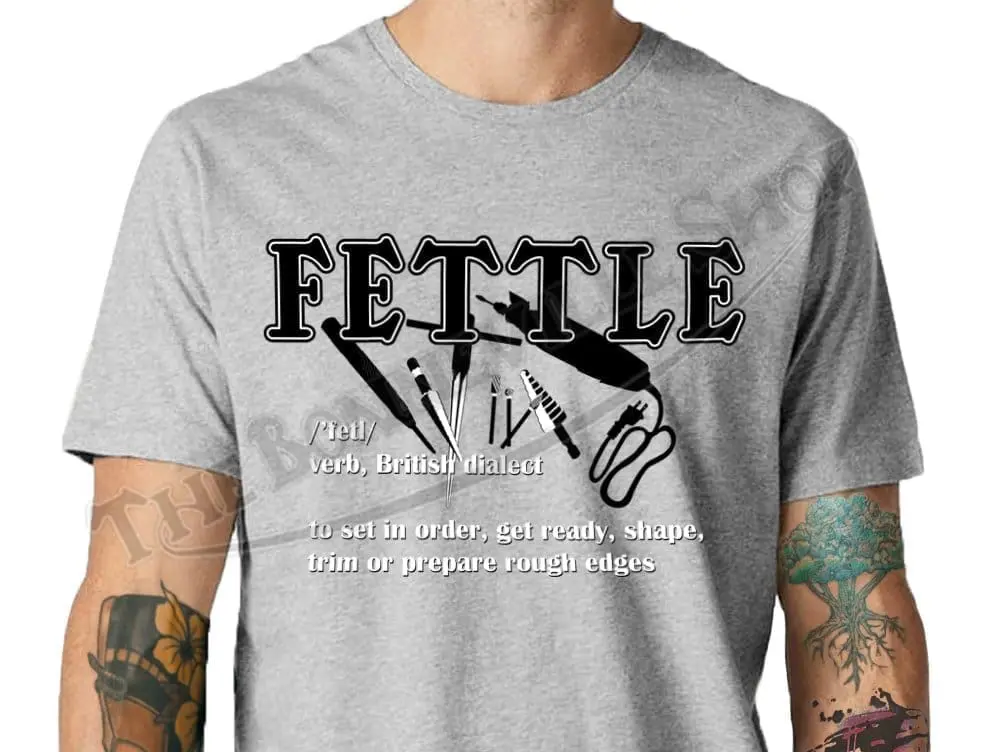
Fettle T-Shirt Grey w/Black Ink PN# TBS-9985
$21.30 – $25.00Price range: $21.30 through $25.00
Triumph Service Bulletin (Twin) 12/73
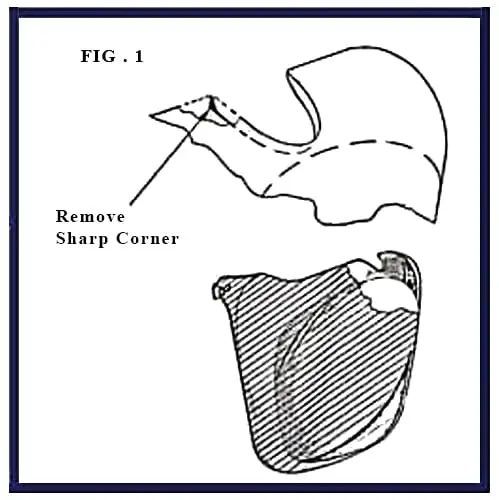
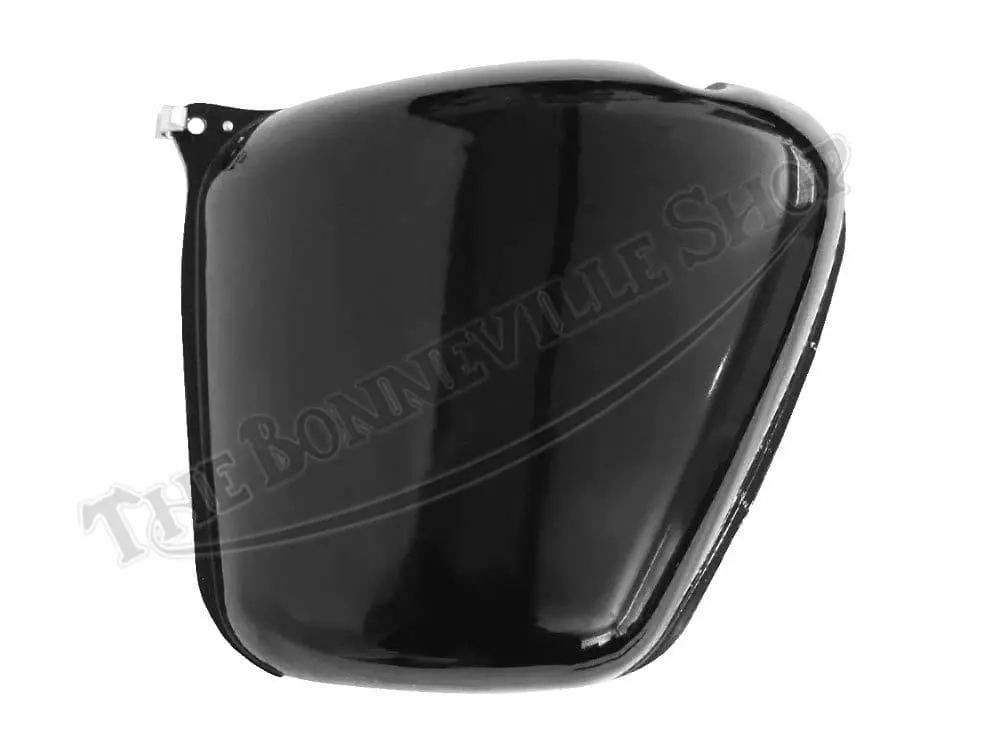
The factory 83-1358 and 82-8042 side cover/tool box was known to have a sharp edged corner at the hinge cutaway that was perilously close to the wiring harness. Fitting Triumph parts like the side cover can require some extra work. Dealers were instructed to remove the sharp corner by means of grinding or cutting with “dykes”, then filing smooth the affected area, obviating the chance of chafing the wiring.
This type of fettling was done in the service shop of the authorized dealer on a genuine factory part installed on a new motorcycle. It is not unreasonable to expect to have to make slight adjustments on reproduction parts when fitting Triumph parts. Fortunately, the reproduction side covers we offer are pre-fettled with respect to the hard corner edge on the seat hinge cutaway.
TRIUMPH SERVICE BULLETIN
Number: (Twin) 12/73
Subject: Side Panel Modification
Model: T100
Date: 11/9/73
LEFT PANEL AND TOOL BOX
The wire harness on T100R’s is routed under the top of the left side panel very near a sharp corner. This sharp corner will chafe the wiring causing an open wire or short in the harness.
REMOVE SHARP CORNER
By means of grinding or cutting with dykes, the sharp corner should be removed, as shown in Fig. 1. Remove all burrs and sharp edges from this area before reinstalling the panel.
Frequently Asked Questions
What does fettling mean when restoring a British motorcycle?
Fettling means making adjustments to a part or assembly so it fits and functions correctly. In British motorcycle restoration, the term can include careful filing, trimming, bending or other fitting work where appropriate. Our article uses it to describe the finishing adjustments sometimes needed during assembly. The broader meaning of the word also includes putting something in order or readiness, as explained in the Collins definition of fettle.
Why do replacement parts sometimes need adjustment on a vintage Triumph?
Replacement parts may need adjustment because pattern parts come from different manufacturers and are produced to varying tolerances. Our article explains that fitting work can be part of assembling a vintage motorcycle, rather than every replacement component fitting perfectly straight out of the packaging. However, the possibility of fettling does not establish that a particular part is correct for your bike—confirm its application before making changes.
Is fettling only necessary with aftermarket motorcycle parts?
No. Our article references Triumph Service Bulletin Twin 12/73 as evidence that fitting adjustments were sometimes necessary even with new, unused factory parts. Fettling is therefore not exclusively a modern aftermarket issue. The important distinction is between an appropriate fitting adjustment and trying to make an incorrect or defective component work. You can explore related factory information in our Service Bulletin Tech Blog.
Which vintage British motorcycle parts may require fettling?
Our article identifies exhaust systems, seats, fenders, sheet-metal components and wiring harnesses as examples of parts that may require fitting attention. The work varies by component: an alignment issue is different from an electrical connection or a precision mechanical fit. These examples do not mean every replacement part needs modification. For a closer look at harness construction and connection differences, see our British motorcycle wiring harness guide.
Does a part that needs fettling mean I bought the wrong part?
Not necessarily. A correct replacement part may need a limited fitting adjustment, but poor fit can also be a reason to stop and verify the application. Before altering anything, compare the supplied part number, listed fitment and mounting arrangement with the motorcycle and its parts references. If you cannot establish why it does not fit, contact The Bonneville Shop rather than assuming modification is required. The article’s discussion of fettling is not a blanket instruction to alter any part that will not fit.
What should I check before modifying a replacement Triumph part?
Check the exact model and year application, part number, installation instructions and how the component relates to the surrounding assembly. Use the correct parts book and workshop manual to help establish what should be fitted. Our books and manuals provide a starting point for that research. If the proposed adjustment is not clearly supported, ask for fitment advice before cutting, drilling, grinding or bending the part.
How much modification is normal when fitting vintage motorcycle parts?
There is no universal amount of modification that is normal for every part. Our article describes several types of fettling but does not provide general material-removal limits, bending allowances or dimensional tolerances. Treat the required adjustment as component-specific. If the work would substantially alter the part’s shape, mounting points or function, stop and obtain advice from the supplier or an experienced British motorcycle specialist.
Can fettling correct worn engine parts or excessive bearing clearance?
Do not treat general fettling as a substitute for specified engine inspection, machining or replacement. The article’s discussion of fitting adjustments does not establish repair procedures for worn precision components. Bearing clearances and wear limits require measurement against the applicable specifications. Our guides to connecting rod bearing clearance and wear limits on measured parts explain why those decisions need a different approach.
Does a replacement wiring harness need fettling too?
It may need installation-specific attention but identify the issue before changing the loom. Our wiring harness comparison explains that connector styles can differ, separate sub-harnesses may be required, and electronic ignition or regulator/rectifier installations need their own equipment instructions. A connector that looks different or an apparently missing lead does not automatically mean the main harness should be cut. Read our Lucas versus unbranded wiring harness guide before making alterations.
What information should I provide when asking for help with a part that will not fit?
Provide the motorcycle’s model and year, the replacement part number, your order number, clear photographs and measurements showing the fitment problem. Mention any known changes to the motorcycle or surrounding components. This gives the supplier a useful starting point for checking the application before you modify the part. Use our contact page to request assistance, and consult our shipping and returns information before making irreversible alterations. This FAQ does not promise that a modified part will qualify for return.