
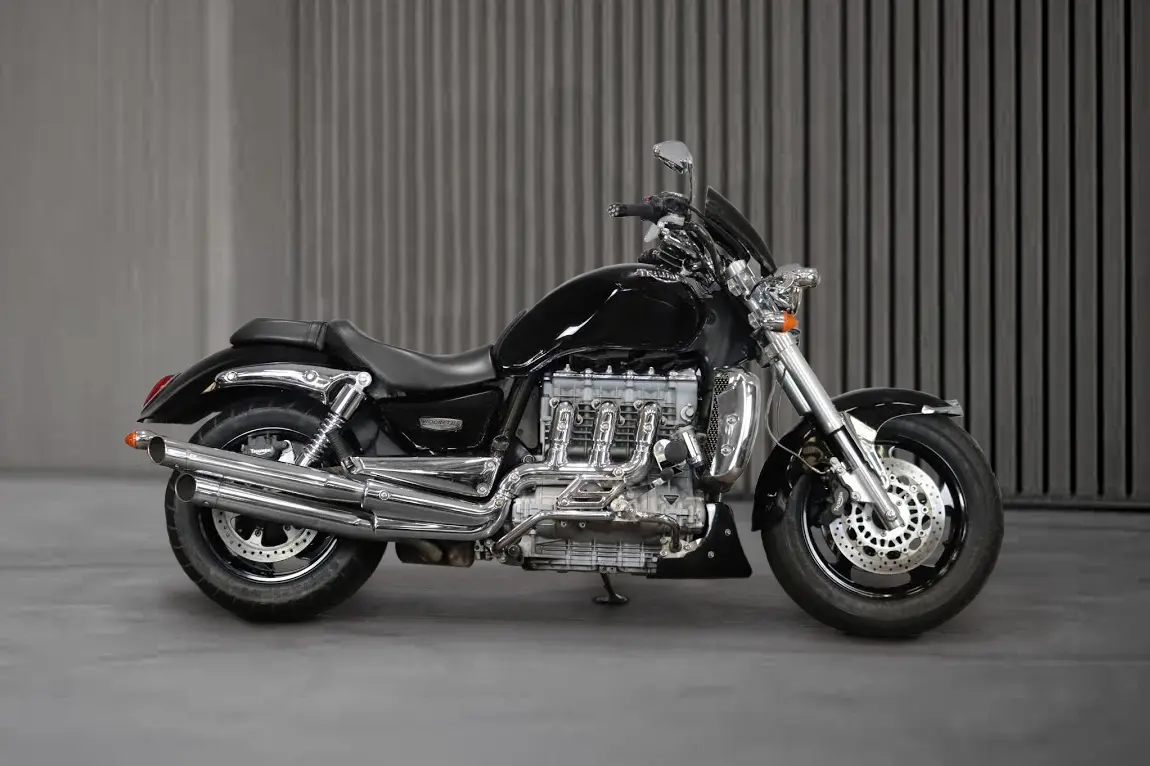
Off The Chain: The Rocket III Shaft Drive
Mike Grage, Customer and Tech Support at The Bonneville Shop and British Iron.
The Triumph motorcycle brand has been around since 1902. Although ownership of the brand and factory locations have changed a few times since then, chain drive was the norm all the way up until Triumph introduced the Rocket III in 2004. This was the first shaft drive motorcycle that had the Triumph name. Shaft drive motorcycles are as old as the Triumph name, in 1902 FN 300 was the first shaft drive motorcycle, it was made by the Belgian manufacturer FN (Fabrique Nationale de Herstal). Fabrique Nationale stopped making motorcycles in the 1960’s, however they still manufacture products similar to what BSA makes today.
There are some pros and cons to having a shaft drive in a motorcycle. The biggest pro is maintenance. You don’t need to lube them like you do with a chain. The Bonneville service manual recommends lubing the chain every 200 miles and check the chain for wear and make necessary adjustments every day.
The Rocket III service manual recommends changing the bevel gearbox oil every 2 years or 20,000 miles, which is the only maintenance required. Chains and sprockets need to be replaced whenever they are worn out, typically around 10,000 or more miles. The bevel gearbox will not need to be replaced if it properly maintained. The biggest con to a shaft drive is power loss since it takes more torque to turn the spiral bevel gears in the final drive unit.
Since the drive train in the Rocket III is inline there is no front bevel gearbox like what is used in the Tiger 1200 or other bikes with transverse engine/transmission assemblies. Inline shaft drive bikes are the only place that I know of where you will find a helical gear set. The reason they use a helical gear is to control the thrust clearance when under power. The helical gears are part of the torsional damper drive assembly, the rest of the transmission has the standard spur gears like any other motorcycle transmission.
The torsional damper assembly acts like the rubbers on a rear sprocket of a chain drive. There is a spring-loaded ramp assembly that smooths out the power delivery to the shaft. If the spring breaks, there is little chance the bike will go anywhere. If the spring gets too stiff or if the ramp cannot slide on the shaft coupling the power delivery will be hard as a rock.
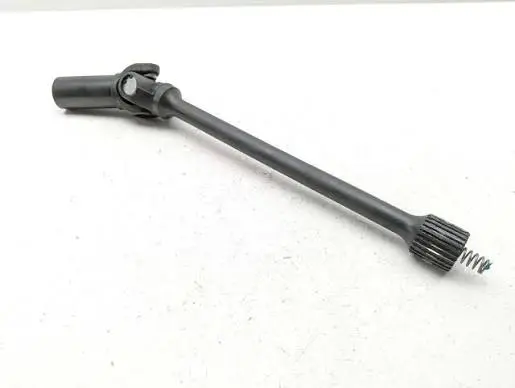
The driveshaft connects to the torsional damper with splined coupling connected to universal joint. The end that splines into the bevel gearbox has a spring to keep the coupling pressed firmly into the torsional damper as pictured below. You will know when that spring goes bad because you will hear a knock every time you hit a bump in the road.
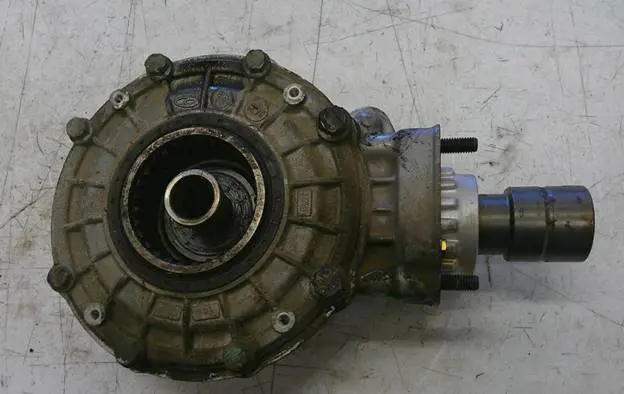
The final drive unit, or bevel gearbox is the part that requires the most maintenance. The maintenance procedure is changing the gearbox oil. It is crucial to use SHC 78W/90 synthetic hypoid gear oil because Triumph does not provide replacement parts. The only repair is to change the entire gearbox and it is expensive. In the old days, you could rebuild the final drive units on other brands. There are eight bolts that can be removed to disassemble the box, but it is advised not to do so since replacement bearing and shims (critical for adjusting the tooth engagement between the ring and pinion gear) are not available.
Like anything else, there are pro and cons to shaft drives. On the pro side, you don’t have chain lube flying off, tire changes are quicker and easier, you don’t have to make adjustments, and they cost less to maintain. The cons are a jerkier power delivery, and repair costs when something goes wrong.