
Why You Need or Don’t Need Them
*Want to watch a quick video instead of reading the blog?
Scroll down to the bottom for our video on spigots!
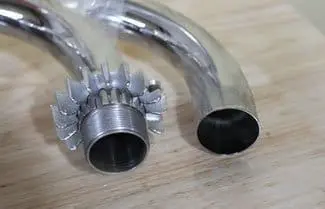
When deciding which exhaust system is right for your bike it is important to know what head your motor has. Never assume that there is such a thing as stock when it comes to a British bike. Some 1970s heads have spigots while others do not; some spigots are threaded into the head, some are pressed. This is an easy error to correct by looking at your head and, by all means, remove your old headers to see exactly what you have and what you want.
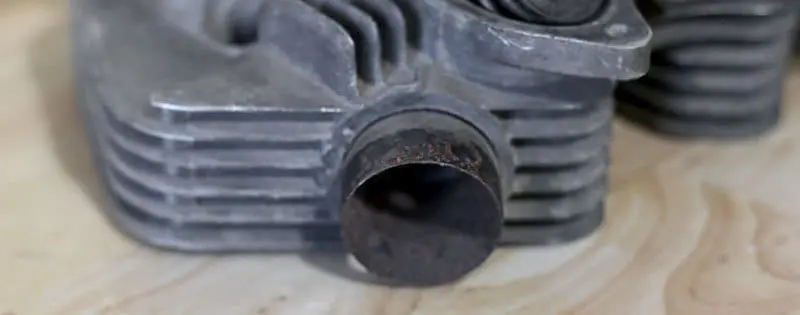

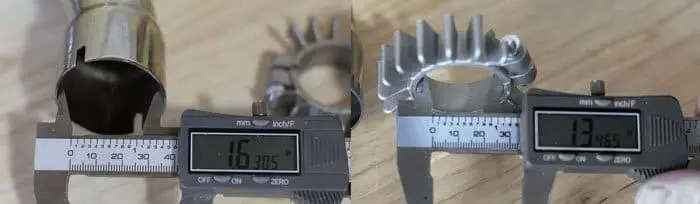
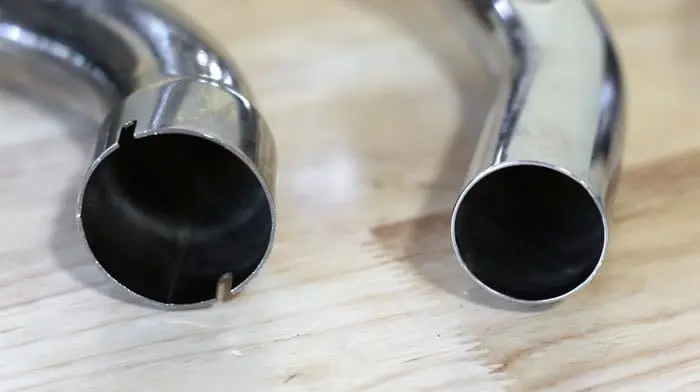
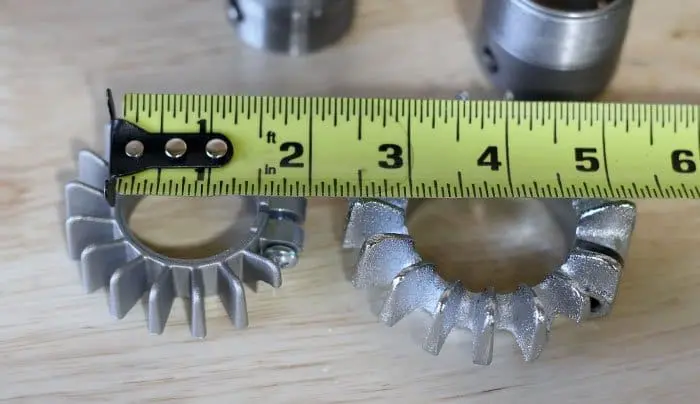
This picture is a 1975 exhaust next to a 1975 exhaust clamp. As you can see even though the parts are both from the same year, these classic British spares are very different, that clamp will never go over that header. The clamp here goes to a T140 engine that has pipes that were just shoved into the head, expecting the balance tube to hold the headers in. The pipes in the picture are for the T140 that has spigots pressed into or threaded into it. Both parts for a 1975 T140, but drastically different.
So, what we have is a situation where your parts book tells you one thing, but reality tells another. Often people did not like the stab in pipes as they leaked gasses so bad backfiring resulted. So, they either pressed in or threaded in exhaust spigots to solve this problem. That also gave them the ability to use unbalanced pipes that were very popular in the 1970’s for their clean look.
When purchasing exhaust parts three things need to be taken into account.
- Does my head have spigots?
- Do I want my head to have spigots?
- What exhaust headers are available to me based on the last two questions?
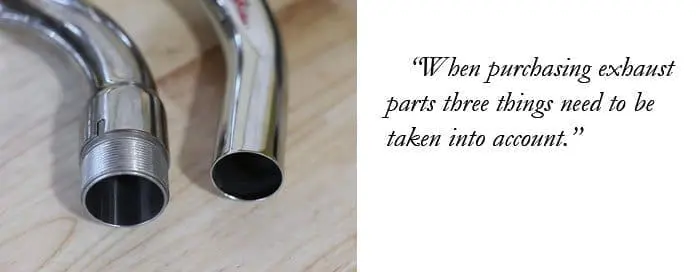
These answers tell us what spigots, if any, what pipes and what exhaust clamps will work on your bike. So, use your measuring calipers and remember to take your old pipes apart and see what exactly you are dealing with before ordering any replacements or upgrades.
We also have oversize thread 70-3583/70-9516 if your old “stab in” head has its original threads messed up by loose fitting pipes rattling around (that happened a lot to T140s).
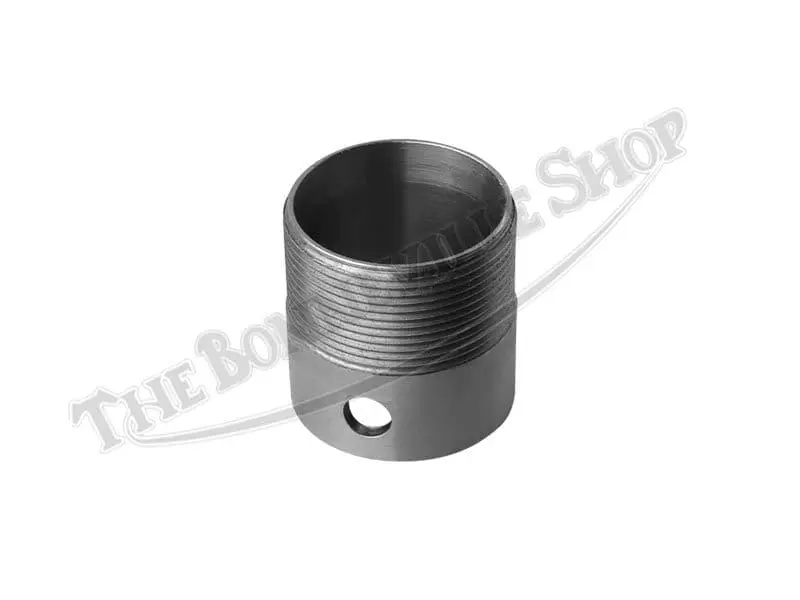
Triumph T100 3TA 5TA T150 T160 BSA A75 Exhaust Pipe Stub Spigot(s) PN# 70-9510 70-2961
$26.91 – $69.29Price range: $26.91 through $69.29
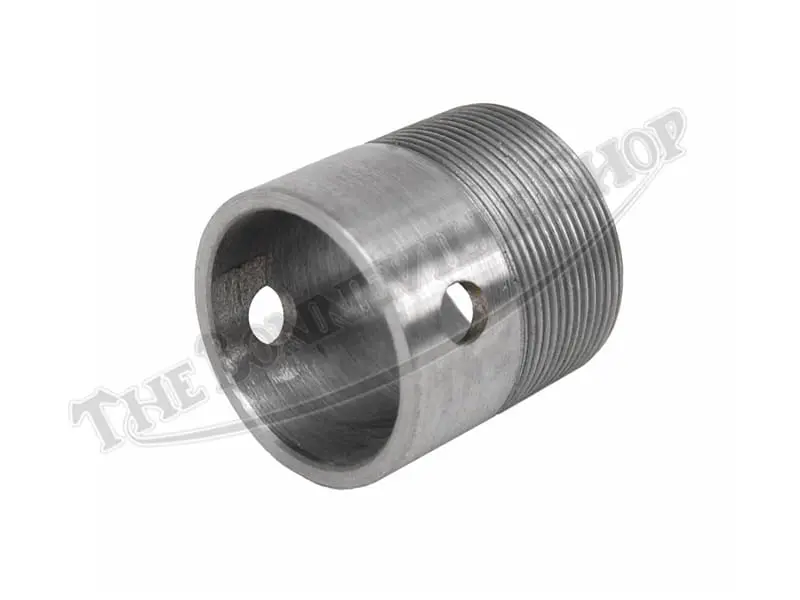
Triumph 650 T120 TR6 Exhaust Spigot(s) Bonneville Tiger STD +.010 +.020 PN# 70-3583 70-9516 E3583 E9516
$24.14 – $43.25Price range: $24.14 through $43.25
TAKE INVENTORY OF YOUR BIKE
– KNOW YOUR PIPES –
– KNOW YOUR SPIGOTS-
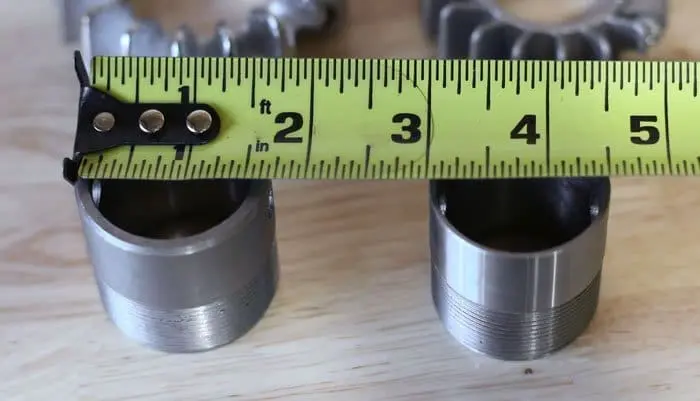
– KNOW YOUR CLAMPS –

If you still have questions you can email, call or text us! orders@thebonnevilleshop.com CALL: 720-570-7884 TEXT: 720-260-4271
Frequently Asked Questions
Do I need exhaust spigots when buying new pipes for my classic Triumph?
Whether you need exhaust spigots depends on the cylinder head fitted to your motorcycle and the type of exhaust headers you plan to install. Some heads use pipes that fit directly into the exhaust ports, while others have threaded or pressed-in spigots that accept matching headers. Inspect your existing head and remove the old pipes before ordering replacements rather than relying only on the motorcycle’s year and model.
What is an exhaust spigot on a motorcycle?
An exhaust spigot is a short connecting sleeve fitted into the cylinder head’s exhaust port. On the arrangements discussed in this guide, the exhaust header fits over the projecting spigot rather than inserting directly into the head. Spigots may be threaded into the cylinder head or pressed into it, so the replacement must match the head’s configuration.
How can I tell whether my cylinder head has exhaust spigots?
Remove the existing exhaust headers and inspect the cylinder head’s exhaust outlets. A spigot-equipped head has a sleeve projecting from each exhaust port for the header to fit over. A direct push-in arrangement accepts the pipe into the head itself. Removing the headers also lets you inspect and measure the actual connections before choosing replacement parts.
What is the difference between push-in exhaust pipes and spigot-fit exhaust pipes?
Push-in, sometimes called “stab-in,” exhaust pipes insert directly into the cylinder head’s exhaust ports. Spigot-fit pipes connect over separate sleeves installed in the head. These arrangements require different matching components, so a pipe or clamp intended for one configuration may not fit the other, even when both are advertised for the same motorcycle model and year.
Why don’t exhaust pipes listed for my motorcycle’s year always fit?
A classic motorcycle may no longer have its original cylinder head or exhaust arrangement. Your article gives the example of a 1975 Triumph T140: pipes intended for a spigot-equipped head can require different clamps from those used with the direct push-in arrangement. Year-and-model fitment is a starting point, but the head, pipes, spigots, and clamps must also match one another.
Can I rely on my Triumph parts book when ordering exhaust pipes?
Use the parts book as a reference but confirm what is actually installed on your motorcycle before ordering. A previous owner may have added exhaust spigots or changed the cylinder head, leaving the bike different from its original specification. Inspecting the head and measuring the existing parts helps prevent ordering an exhaust system that matches the book but not your motorcycle.
Can a push-in exhaust cylinder head be converted to use spigots?
Some push-in exhaust arrangements have been converted by fitting pressed-in or threaded exhaust spigots. Your article describes this modification on Triumph T140s as a way owners addressed leaking pipe connections and fitted alternative headers. However, the appropriate conversion depends on the particular head and its condition; confirm the required spigots and matching pipes before buying conversion parts.
Why did owners add exhaust spigots to Triumph T140 cylinder heads?
Owners sometimes added spigots because the original push-in exhaust connections leaked, with backfiring reported as a result. A spigot conversion also allowed the use of compatible headers without a balance tube, a style that became popular for its cleaner appearance. The conversion changes which pipes and clamps fit, making inspection especially important when replacing an older exhaust system.
Do I need different exhaust clamps for spigot-fit pipes?
You may. Exhaust clamps must match the pipe dimensions and connection style, not simply the motorcycle’s year. The article shows a header and clamp both associated with a 1975 T140 that will not fit together because they belong to different exhaust arrangements. Check the header’s dimensions and the clamp’s fitment before ordering them as a combination.
What should I measure before ordering motorcycle exhaust pipes and spigots?
Use measuring calipers to check the existing pipe diameter, spigot dimensions, and clamp opening. Pay particular attention to the mating surfaces where the header connects to the spigot or cylinder head. Record whether each measurement is an inside or outside diameter and compare those measurements with the replacement part’s specifications. Remove the old headers first so you can identify the actual connection rather than guessing from its assembled appearance.
Can loose exhaust pipes damage the cylinder head’s exhaust-port threads?
Yes. Your article notes that loose-fitting pipes can rattle around and damage the original exhaust-port threads, a problem encountered on some T140 heads. If the connection is loose, inspect the port before ordering another standard-size component. The condition of the head may affect whether a standard replacement or an oversize-thread repair option is appropriate.
Are oversize exhaust spigots available for damaged cylinder-head threads?
Yes. The article links to standard and oversize-thread exhaust spigot options in the 70-3583/70-9516 product family. An oversize spigot is a potential repair option, not a universal replacement for every damaged exhaust port. Confirm the cylinder head’s application, existing dimensions, and thread condition before selecting the replacement size.