

By Dave Porter, Technical and Customer Support at The Bonneville Shop
How do I know if my clutch plates need replacing?
- Check for obvious signs of wear especially on the inner tabs of steel plates
- Check for any warping and ensure they’re flat
- Measure thickness: When the thickness of the friction segments falls to .140”, it is good practice to replace the friction plates
- Clutch springs should be replaced when the measurement reveals that the springs are shortened by .100” or more
Clutch Plates AND Springs
Clutch Plates
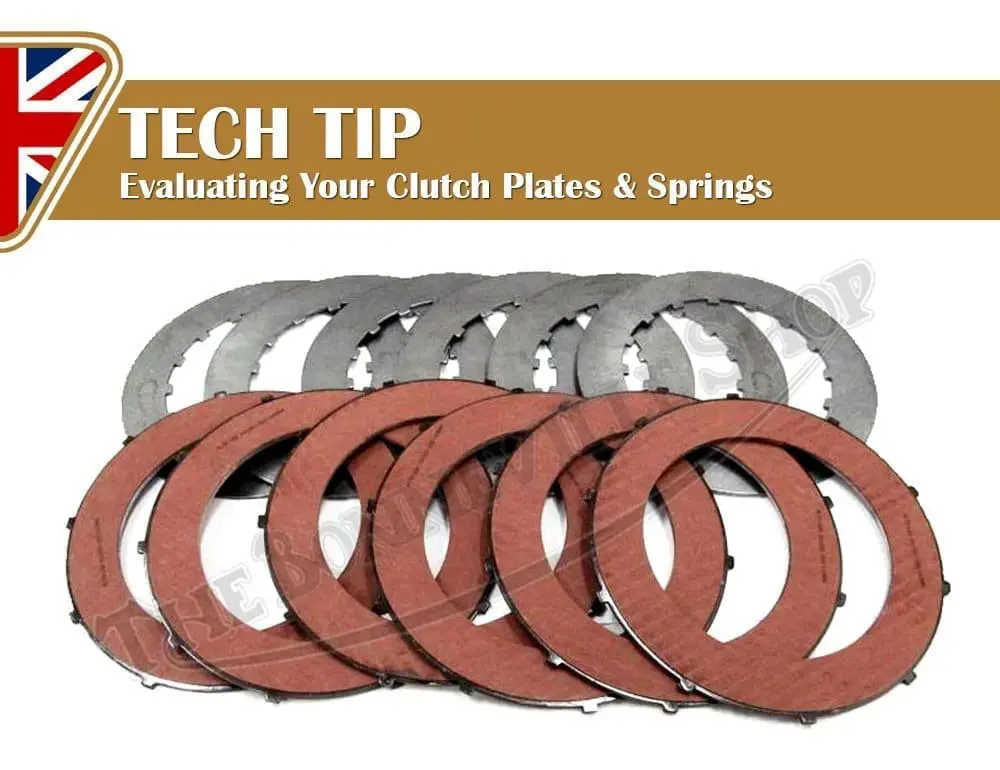
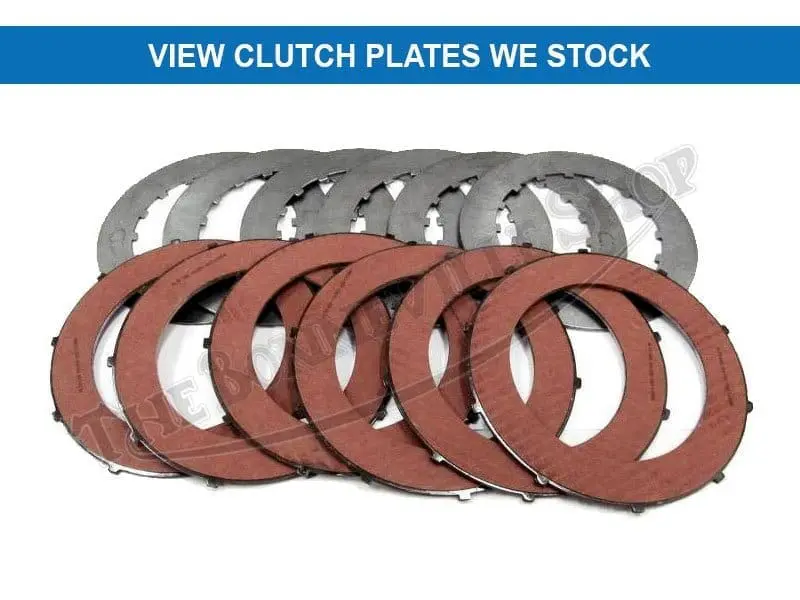
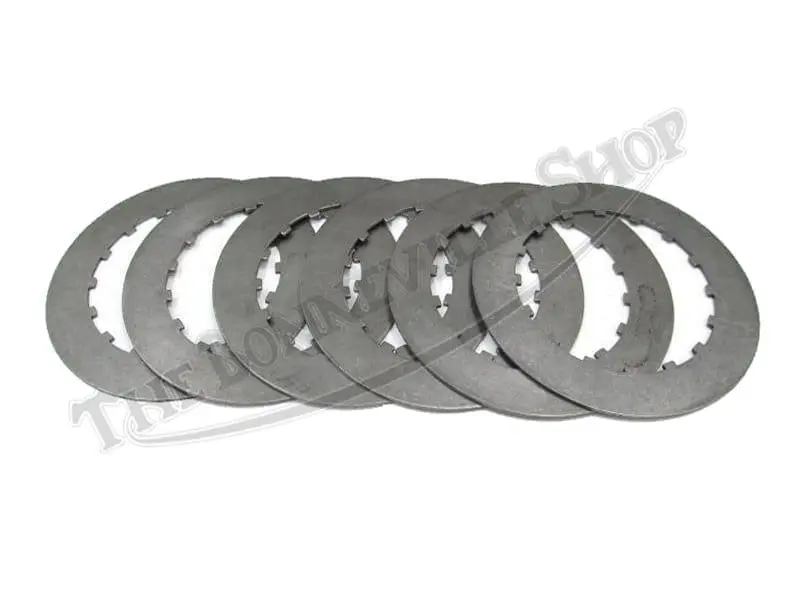
When evaluating the clutch plates and springs, clean and inspect the clutch plates for obvious signs of damage or wear. When the inner tabs on the plain steel driven plates are showing burrs, they will fit on the clutch center splines loosely and will contribute to premature wear to the clutch center, leading to a dragging clutch.
Also check them for flatness to ensure they are not warped. If the tabs are not overly worn, and the plates are flat, they can often be refitted for service. A trick that has served me well over the years is to bead-blast the steel plates to remove the glaze that occurs during normal use. This will aid in adhesion to the friction plates during clutch engagement. The inspection of the locating tabs on the friction plates will also need to be done.
“A trick that has served me well over the years is to bead-blast the steel plates to remove the glaze that occurs during normal use.”
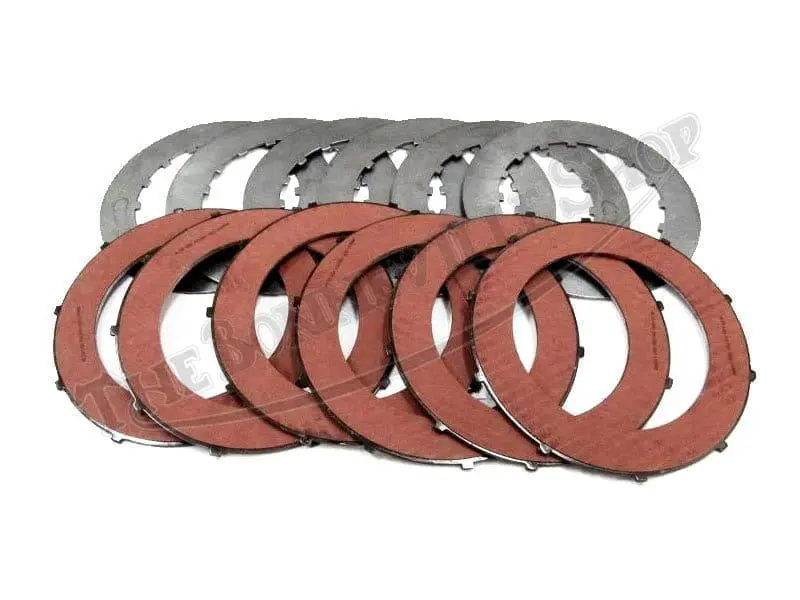
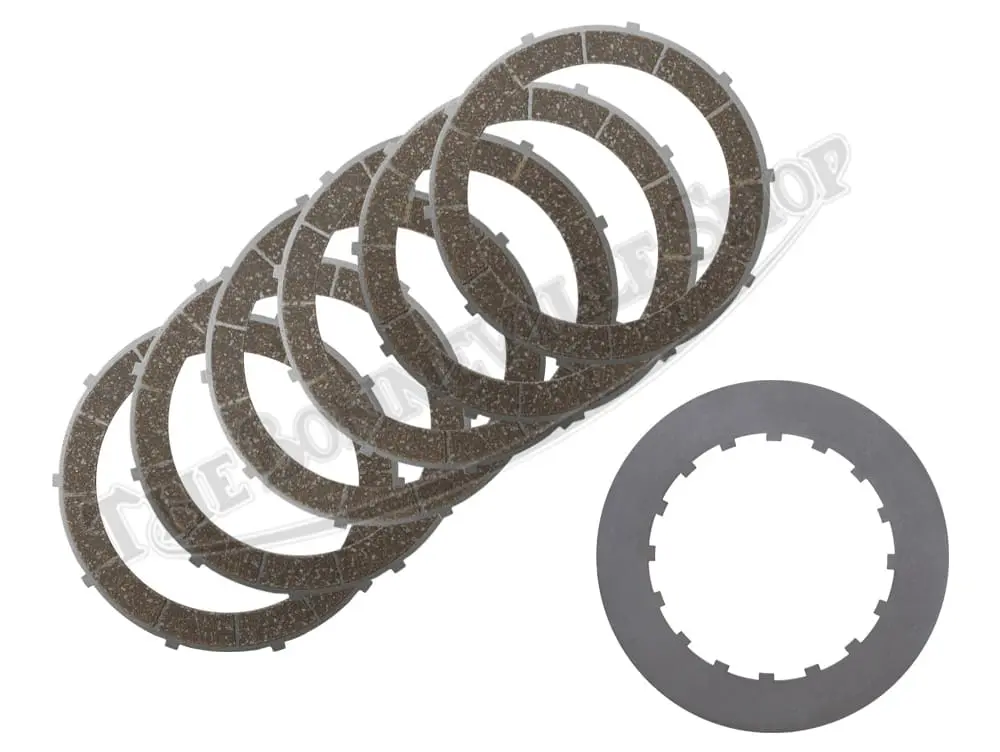
Another key measurement is one that is not mentioned in the factory workshop manuals. The stock driving clutch plate segments usually measure .155” thick (new), but will wear thin in service, leading to clutch slipping. When the thickness of the friction segments falls to .140”, it is good practice to replace the friction plates to obviate the need to compensate for the wear by overtightening the clutch springs, resulting in a heavier pull at the handlebar control lever.
Clutch Springs
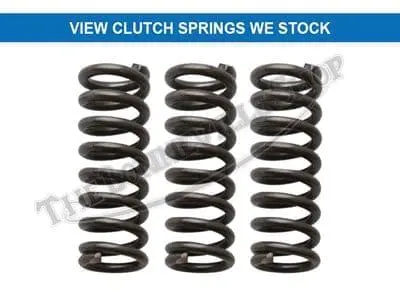
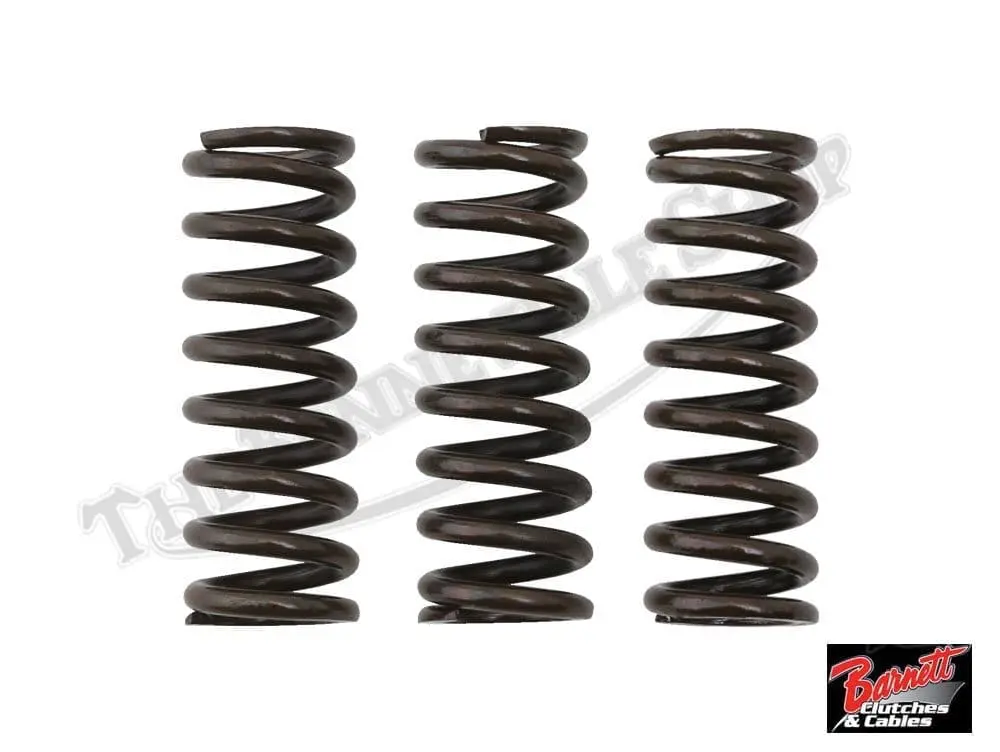
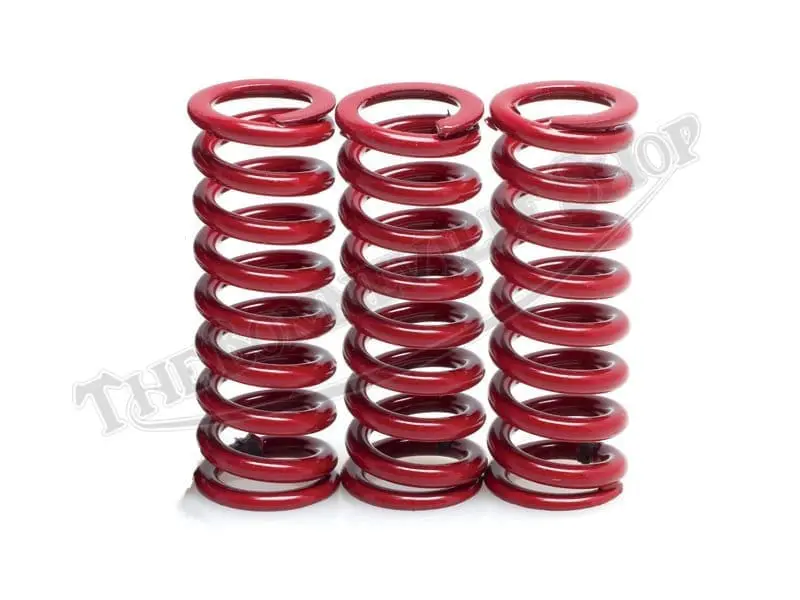
One more important measurement in evaluating your clutch plates and springs is to make is the free length of the clutch springs. The clutch springs should be replaced when the measurement reveals that the springs are shortened by .100” or more. Clutch springs are relatively inexpensive and are asked to perform a critical function in the clutch assembly, so it is a false economy to put worn and shortened springs back into service when they have taken a set.
Check out our other blog: TECH TIP: How to Install New Clutch Rubbers
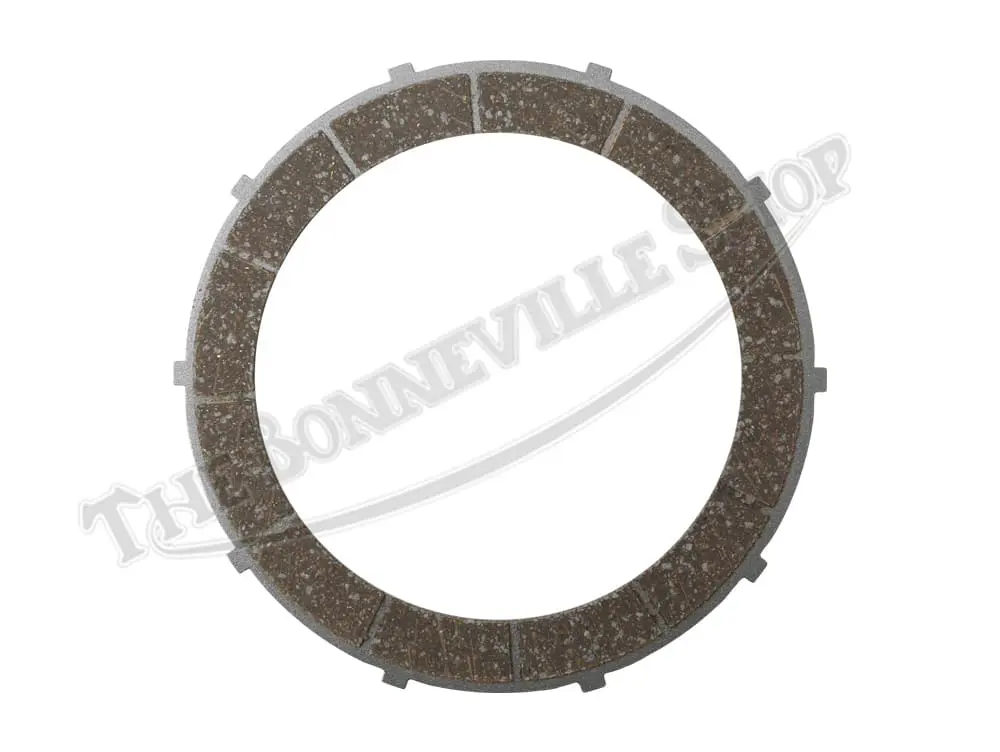
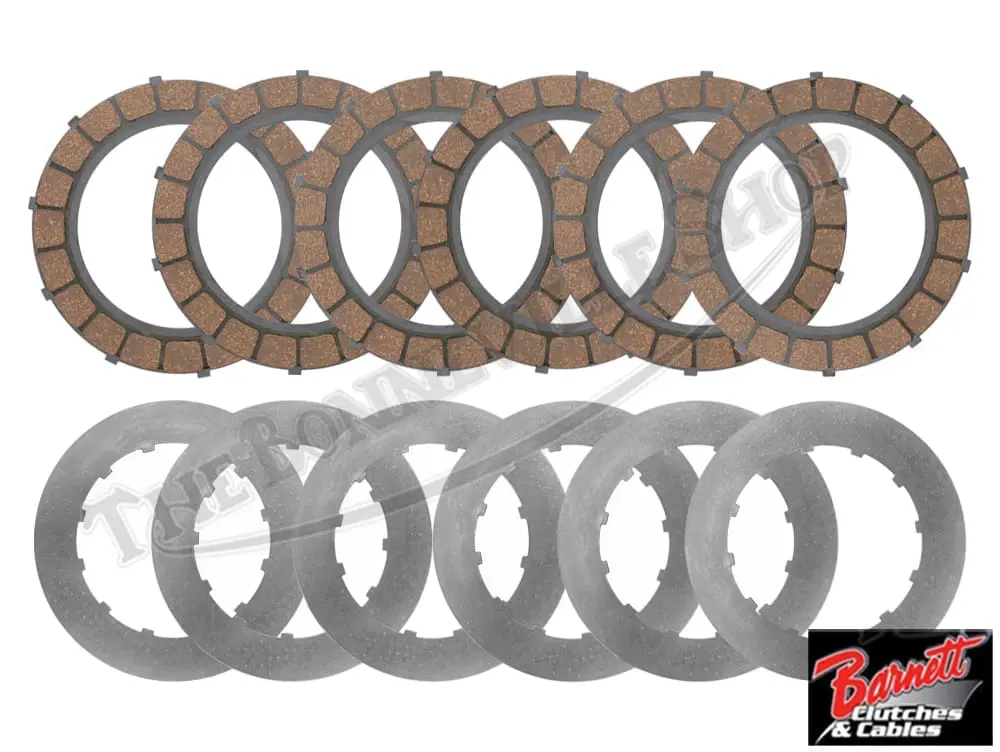
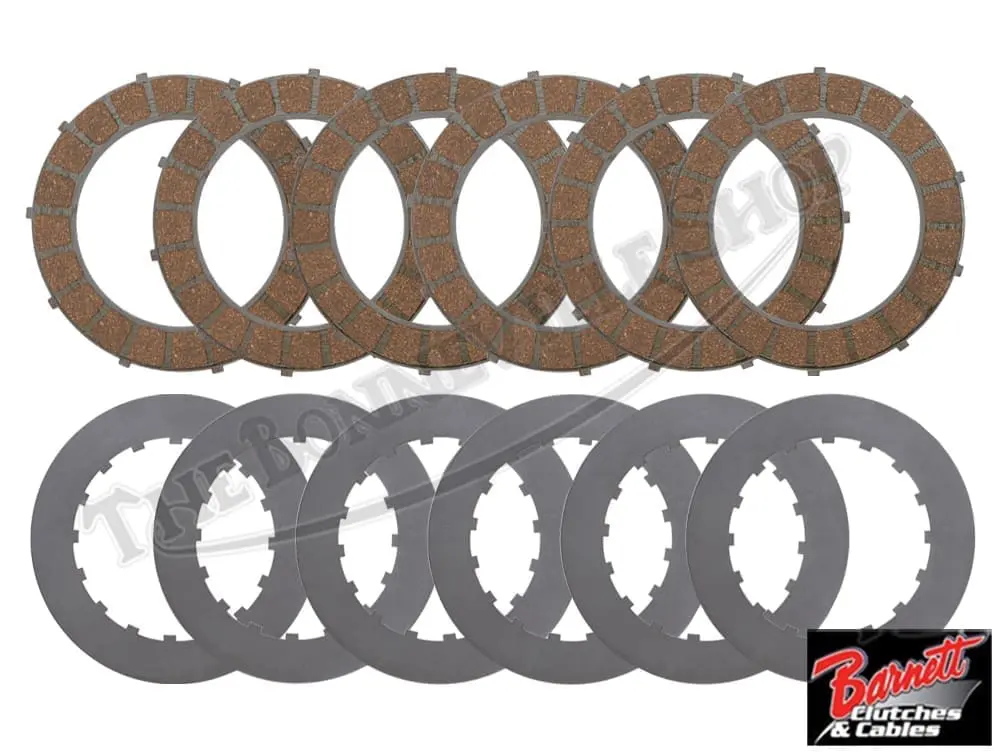
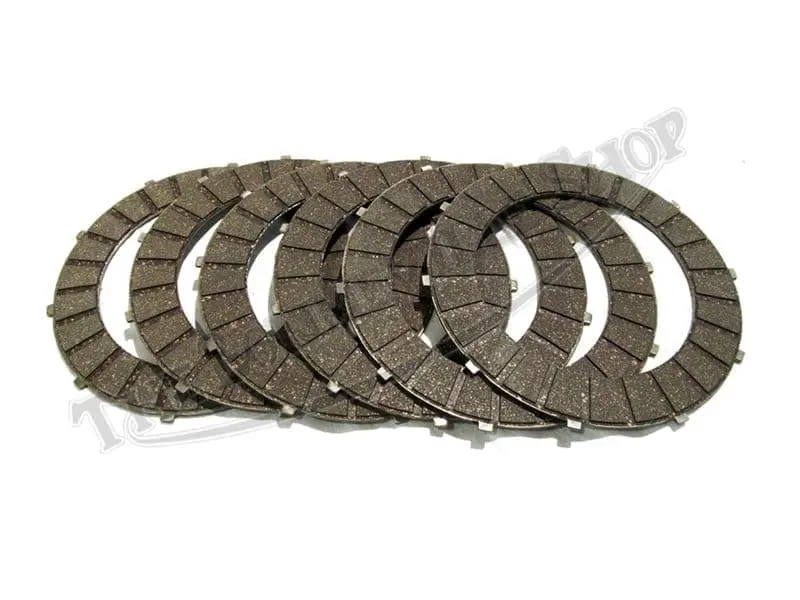




Triumph TR25W T25T Singles BSA C15 B25 B40 B44 B50 1959-73 Friction Clutch Plate(s) PN# 57-2726 B
$24.98 – $124.73Price range: $24.98 through $124.73
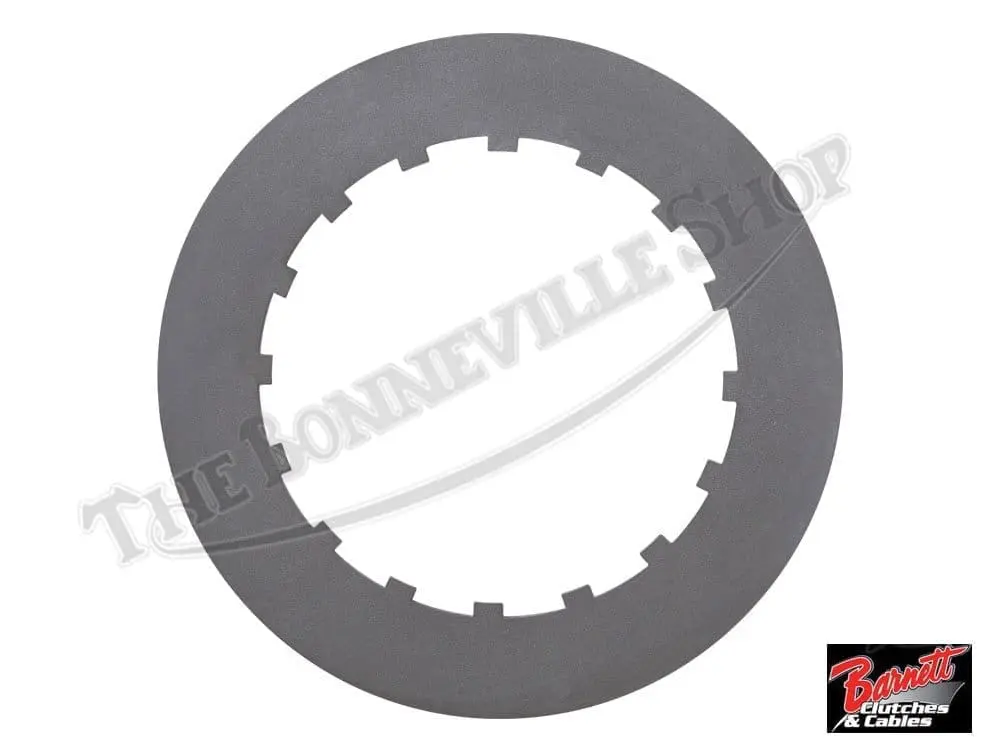
Triumph BSA 500 650 750 Steel Driven Clutch Plate(s) PN# 57-1363 B
$16.82 – $70.52Price range: $16.82 through $70.52
Frequently Asked Questions
How do I know if my Triumph clutch plates need replacing?
Clean the plates and inspect for damage, worn or burred inner tabs on the steel driven plates, and warping. Replace friction plates when the segments measure .140″ thick or less (new stock is typically ~.155″). Worn tabs cause loose fit on the clutch center, premature wear, and a dragging clutch. Shop replacement plates in our Triumph clutch and primary section.
What thickness should Triumph friction clutch plates be?
New stock driving (friction) plate segments usually measure about .155″ thick. When they wear down to .140″, replace them. Continuing to use thin plates forces you to overtighten the springs, which creates a heavier pull at the handlebar lever and can still allow slipping.
Why do worn steel clutch plate tabs cause problems?
When the inner tabs on the plain steel driven plates develop burrs, the plates fit loosely on the clutch center splines. This accelerates wear on the clutch center and commonly results in a dragging clutch that does not fully disengage.
Can I reuse steel clutch plates if they look okay?
Yes, if the tabs are not overly worn and the plates are flat (not warped). A useful tip is to bead-blast the steel plates to remove the glaze that builds up in normal use. This improves adhesion to the friction plates during engagement. If tabs or flatness are questionable, replace them.
When should I replace Triumph clutch springs?
Replace the springs when measurement shows they have shortened by .100″ or more from their original free length. Weak or short springs contribute to clutch slip under load. View spring sets such as the Barnett 57-1830 in our catalog.
What happens if I overtighten clutch springs to compensate for worn plates?
Overtightening to make up for thin friction plates increases the force required at the handlebar lever, making the clutch harder to pull. It does not fully solve slipping and can accelerate wear on other components. Replacing the worn plates is the proper fix.
How do I check clutch plates for flatness?
After cleaning, lay each steel plate on a flat surface or use a straightedge to check for warping. Warped plates will not seat evenly, leading to incomplete engagement or drag. Discard any that are not flat.
What causes a Triumph clutch to drag?
Common causes include worn or burred tabs on the steel plates (allowing loose fit on the center), warped plates, or incorrect stack height. Inspect and replace plates as needed, and ensure the clutch is properly adjusted. Related maintenance is covered in our clutch rubbers installation tip.
What causes a Triumph clutch to slip?
Slip is often caused by friction plates worn thinner than .140″, weak or shortened springs, or oil contamination on the plates. Measuring thickness and spring free length helps identify the issue. Upgraded packs such as Barnett plates are available in the clutch category.
Should I replace both friction and steel plates at the same time?
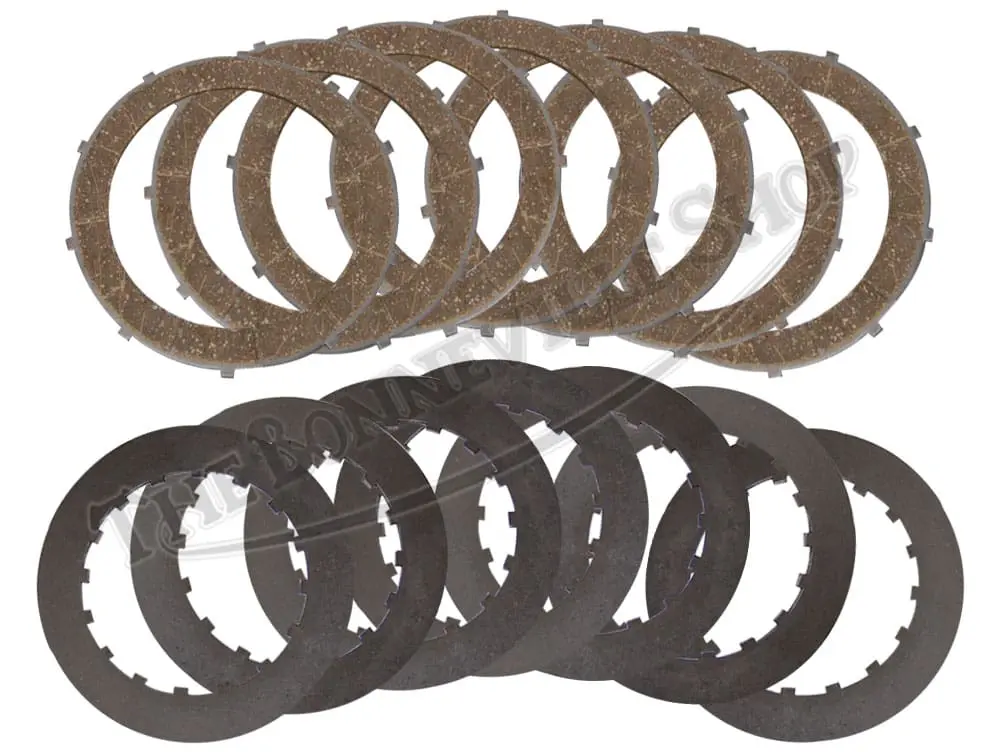
It is good practice to inspect both. Replace friction plates at the .140″ limit and steel plates if tabs are burred or plates are warped. Replacing the full set (or a complete pack) restores proper engagement and reduces the chance of recurring problems. Complete packs are listed under Triumph clutch parts.
Does bead-blasting steel plates help?
Yes. Bead-blasting removes the glaze that forms on steel plates during normal use. This improves friction adhesion when the clutch engages and can help serviceable plates perform better before full replacement is required.
Where can I find replacement clutch plates and springs for my Triumph?
The Bonneville Shop stocks friction plates, steel plates, spring sets (including Barnett and OEM-style), and complete packs for 500, 650, and 750 twins. Browse the Triumph clutch and primary collection or search by part number such as 57-1362 or 57-1830. For related wear limits guidance, see our wear limits article.