


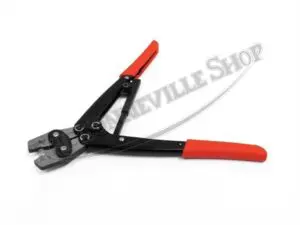
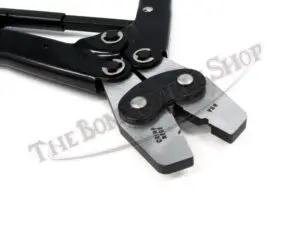
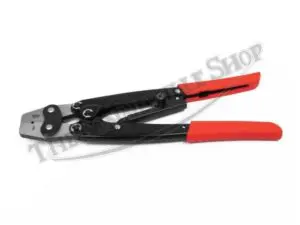
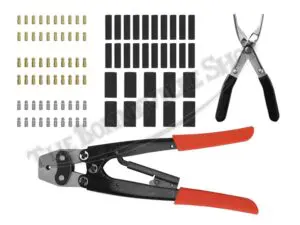
This hexagonal bullet connector crimper tool is manufactured specifically for crimping the 4.7mm Lucas-style bullet connectors onto 16 AWG and 18 AWG stranded wires, as commonly used on vintage British automobiles and motorcycles. When used correctly, the bullet crimping tool provides a secure and permanent crimp, saving time and frustration versus soldering. Ideal for wiring harness construction and repair.
The crimping tool has a ratcheting mechanism that ensures a secure and successful hexagonal crimp when fully closed over the narrowed waist of the 4.7mm Lucas-style bullet crimp-type connector. Designed for use with 16 and 18 gauge stranded wires. Not recommended for use with solid-core wiring.
The hexagonal crimp is a superior way of fixing bullet connectors to stranded wiring compared to a crude flat crimp, where the bullet connector becomes compromised by the collapse of the metal structure. The hexagonal crimp offers an even grip on the wiring when the correct gauge of wire is used with the appropriately sized bore of the Lucas-style 4.7mm OD bullet connector. Minimum recommended wire size for crimping with this tool is 18 gauge.
The 1mm bullet connectors are compatible with 18 gauge stranded wires, while the 2mm bullets will accept the larger diameter 16 gauge stranded wires. It is critical to use the bullet connector crimper so the crimp is placed at the narrowed waist of the bullet connector to ensure adequate conductivity between the wire and bullet. Generally, about 7-8mm of insulation is stripped from the wire, resulting in a visible tuft of copper wiring above the tip of the connector. Tinning stranded wiring is not recommended when hexagonally crimping the bullet connector.
Please note: Due the nature of the product, we unfortunately do not accept returns on bearings, service tools or electrical components. Please be confident about your purchase before ordering. If you have questions, please contact us.
Looking for bullets? Check out these options:
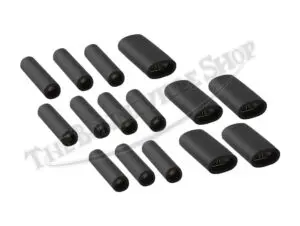
We also have a comprehensive kit that includes bullets and sleeves: Triumph Norton BSA Etc Lucas Electrical Tool Kit With Connectors
The product images shown are for illustrative purposes only and may not be an exact representation of the product received. Manufacturers occasionally make minor cosmetic changes to items, such as color, finish, label, or design. These changes do not impact the item’s function or compatibility. Please contact us if you have specific concerns regarding appearance.
______________________________
Lucas Bullet Connector 900269 Hex Crimping Tool FAQs
What wire gauge and bullet connectors does the TBS-0394 crimping tool work with?
The TBS-0394 is a ratcheting hex crimper made for 4.7mm OD Lucas-style bullet connectors on 16 AWG and 18 AWG stranded wire. Match the bullet to the wire. Use 1mm brass bullet connectors (PN# 900269 A) or 1mm tinned bullet connectors (PN# 900269 C) for 18 AWG wire. Use 2mm brass bullet connectors (PN# 900269 B) for 16 AWG wire. The tool isn't meant for solid-core wire or anything thinner than 18 gauge. If you have a mix of wire sizes, the Lucas Electrical Tool Kit with Connectors (TBS-0666) includes this crimper, bullet-closing pliers and an assortment of bullets and sleeves
Is crimping Lucas bullet connectors better than soldering them?
For most vintage Triumph, Norton and BSA wiring, a correct hex crimp is quicker and lasts well. A good crimp is gas-tight, which keeps out moisture and oxygen. It also holds up to vibration and heat cycles because the compressed metal grips the wire (
Wikipedia: Crimp
). Solder can leave a stiff section of wire that may crack from vibration over time, so many riders crimp instead. A cheap flat crimp is different: it crushes the bullet and grips unevenly, which is why a hex tool matters. Don't tin the wire before you hex-crimp it.
How do I crimp a Lucas bullet connector correctly?
1. Slide on any sleeve or insulator first.
2. Strip about 7–8mm of insulation.
3. Push the strands fully into the bullet until a small tuft of copper shows at the tip.
4. Put the narrow waist of the bullet in the jaws and squeeze until the ratchet releases.
Crimping anywhere other than the waist gives a weak connection or damages the bullet. Pull hard on the wire to test it: a good crimp holds. Trim any strands flush with the tip. Add a light coat of dielectric grease, then push the bullet into a Lucas single or double female sleeve connector. The bullet terminal closing tool seats it without pinching the insulation. For more on bullet and sleeve types, see Revington TR's bullet connector guide, or browse all electrical connectors.

Matthew Buckman (verified owner) –
This is a quality tool that you’ll need to buy only once. If you want a perfectly crimped bullet connector, you need this tool.
Boris (verified owner) –
Can only confirm the other review. Price is a bit on the expensive side but worth every penny. I paid equally much for my other ratchet-type crimping pliers. For me it became doubly hefty as I’m located in Germany and postage was really hefty. It’s incomprehensible to me why items shipped from China cost almost zero postage and here I had to pay more than the price of the actual item.
Anyway, this set of pliers do what they should and they do so far better than any other tool I used to crimp (or attach) bullet connectors. I can highly recommend these!
Anonymous (verified owner) –
Very highly recommend this tool. Price is staggering, but that is the cost of quality tool that actually works. This tool is indeed professional quality. You will not regret buying this tool. There is no other tool sold that can give original hex crimp like factory used. The hex crimp holds wire better than the less costly pinch crimper that is on the market. Way easier than soldering. Works especially good for replacing broken alternator wire bullets.
Using tool takes a little practice. Depending on bullet size & conductor size you can over-crimp & distort bullet.
Too thin of conductor for the bullet in hand the wire will pull out.
It is important to understand the relationship between bullet inside diameter, wire diameter & how much to crimp bullet. Bullets for sale here at Bonnie Shop are sized for Triumph 14 strand wire, or AWG 16,18 size (C314 bullet). Other size wire needs bullet with larger or smaller ID hole. 4 sizes of bullets are made for AWG from 20 through 12 gauge strand wire.
Using crimper, you strip wire, place conductor into fully into bullet. Place recess of bullet in crimper jaws. Jaws are sized just right for recess.
Squeeze crimpers until bullet is crimped & conductor is held tight. The ratchet on pliers keeps jaws from opening until jaws are fully closed very tightly, then ratchet auto releases.
However, this formula only works with specific wire size in specific size bullet. C314 bullet with Triumph 14 strand or 18 AWG wire. 16AGW it tends to over crimp.
This is where practice comes in. Get several spare bullets. On the bench practice with Triumph 14 strand if possible. At least practice with both 16&18AWG wire & get the feel of it. Try to pull wire out hard as you can. It should break wire before it pulls out. I find with 16g I stop crimp just before auto release. You can turn knob & release ratchet whenever you want or need to.
Auto release works good with Triumph 14 strand & C314 connectors sold here at Bonnie Shop
Once you get the hang of it you can make perfect crimps every time very quickly that will never pull off. It conductor sticks out past bullet tip, simply cut it off flush.
Triumph 14 strand wire means original Triumph wire that has 14 copper strands inside it. Probably Imperial (British) 18G which is slightly fatter than 18AWG.
Tip, put a few drops of motor oil on all the pivots & moving joints of crimper. Gives it really smooth operation.
Don